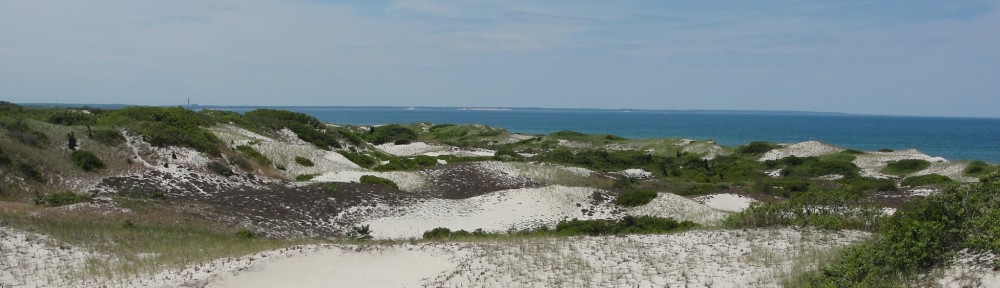
As much as I love to be outdoors much of my work each week keeps me indoors at a computer or studio table, especially in winter. Even on the coldest and wildest of winter days, however, I like to get out of the house and often take my sketchbook or notebook with me. Some days I jot down a few thoughts, some days I sketch a bit and lots of days I just get lost in thought while watching the waves and the gulls and I don’t do either.
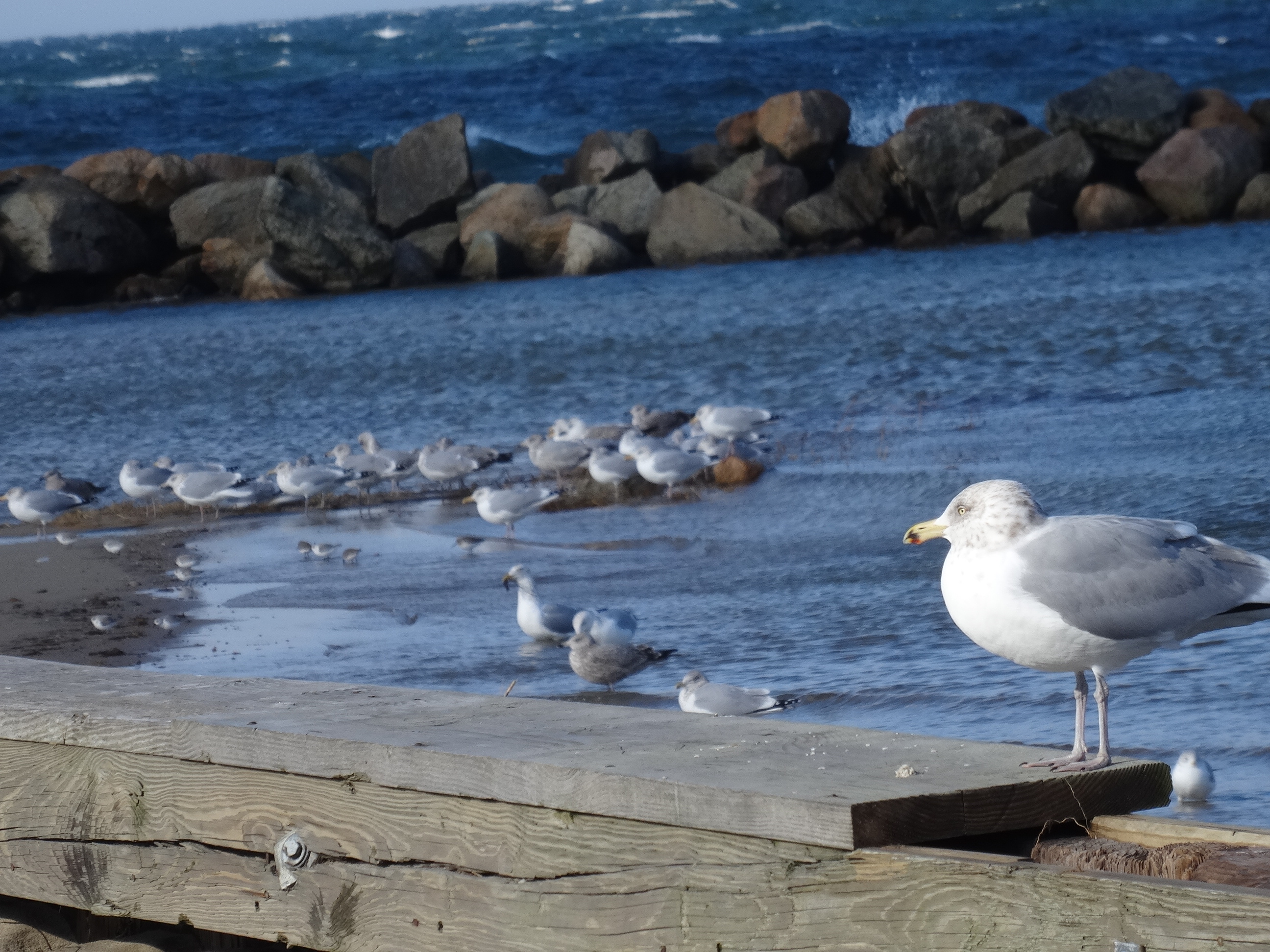 Some days I contemplate the winter lives of gulls. It has to be tough being a gull on the winter beach. It’s cold, windy and often just nasty and uncomfortable. In order to keep their insulating feathers in place they must face right into the wind and no matter how hunkered down in the sand or behind rocks they are, that has to still be really cold and yucky. And how about those naked scaly legs? I have read a lot about how birds keep warm, especially their legs and feet but still, looks pretty cold to me.
Gulls are not what we may call “nice” birds. They scavenge, they argue, they steal and they murder. I have seen gulls kill the young of other gulls and I’ve seen them drown diving ducks. In spite of all that, I respect their ability to survive and thrive. Gulls are tough, really tough.
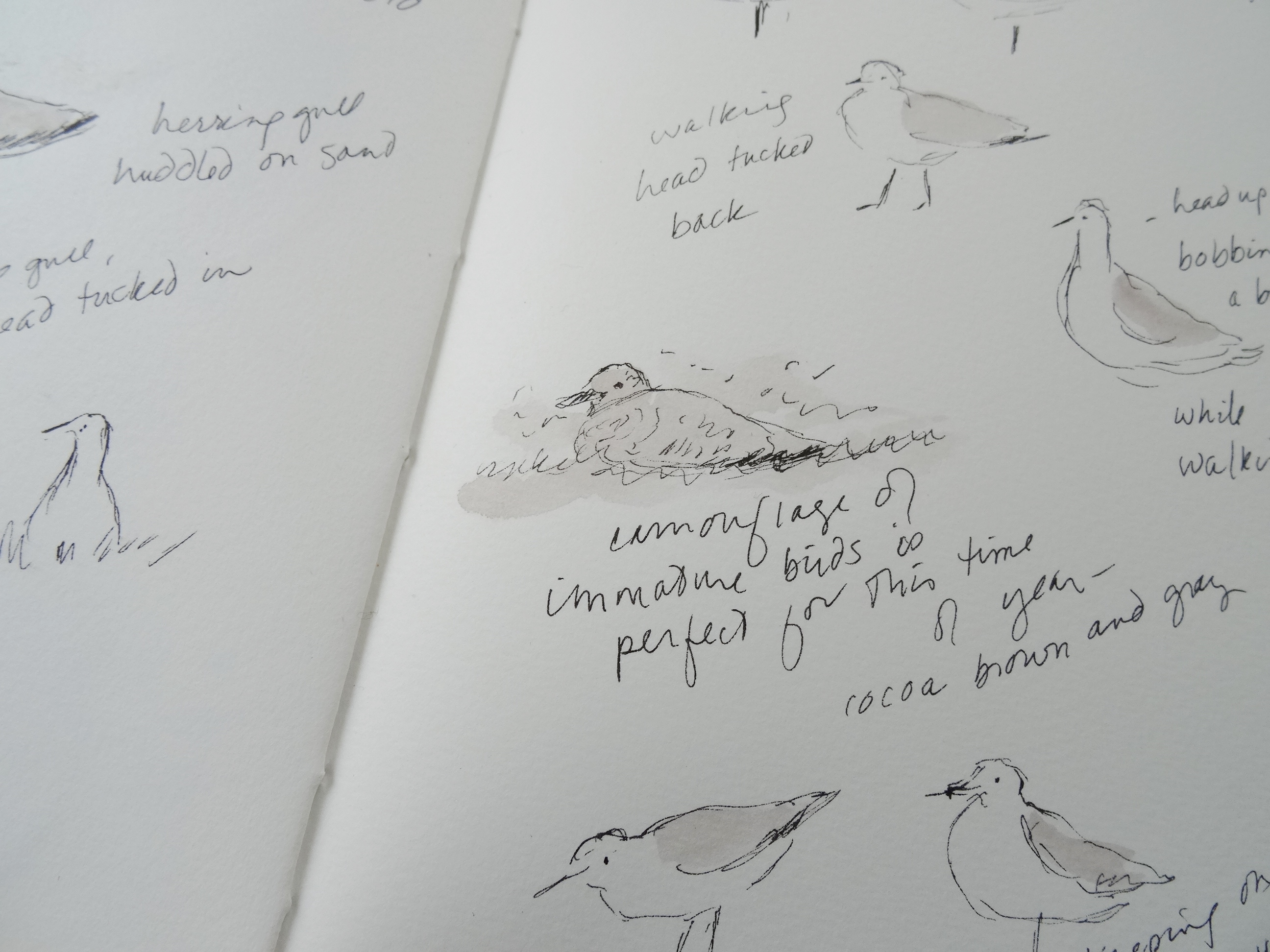 Over the years I’ve drawn a lot of gulls, probably more than I’ve drawn any other single kind of bird. Gulls have many postures but they also have a rich language. I can watch and listen to them for long periods of time.
I often find inspiration in nature. Usually I look for the beautiful and sublime to raise my spirits but some days, I only need to watch the gulls for a bit. They remind me that we can be strong and persevere through whatever gets tossed our way and some days that is exactly the message I need to hear.
How about you? What in nature inspires you the most?


